

GWM Tank 300 Hi4-T PHEV Review
An off-roader that doesn’t even need a sniff of an oily rag to get you around town. Sounds great… right?


By carsales.com.au
Talk about impeccable timing.
At a juncture in history where a fuel crisis is shaking our faith in the traditional diesel-powered ladder-frame 4x4, in struts a petrol-electric alternative from GWM’s Tank division.
Retaining all the tough-mudder underbits, the 2026 GWM Tank 300 Hi4-T PHEV welds them to an electron-enhanced powertrain that allows owners to adeptly dodge oil refinery shutdowns and trade embargos, while upping the performance envelope to a massive degree.
So, what’s the catch?
How much does the GWM Tank 300 Hi4-T PHEV cost?
Starting from $57,990 drive-away in Lux guise and $61,990 drive-away for the flagship Ultra tested here, the GWM Tank 300 Hi4-T PHEV presently carries a $9000 premium over its 2.4-litre turbo-diesel equivalents, or just $5000 more than the Tank 300 HEV.
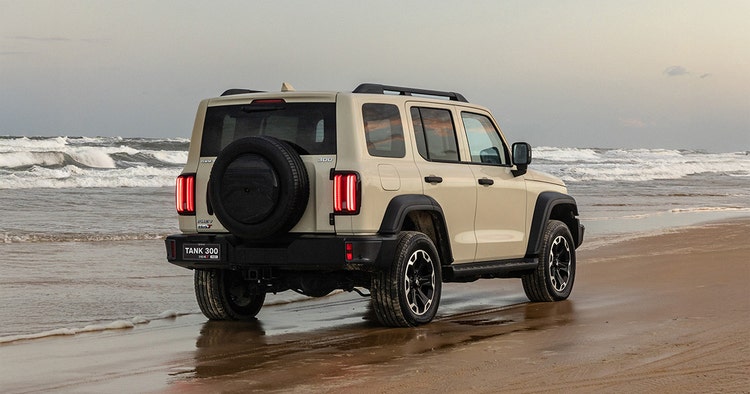
For those looking to divorce themselves from diesel, GWM says its new plug-in hybrid will pay itself off rapidly, supposedly saving $5138 in fuel costs within two years compared to a 300 diesel – assuming both are driven 20,000km a year, the hybrid only spends half of its driving life electric mode, and the price of diesel costs $3.20 per litre.
If you’ve just spent the last couple of months sweating the cost – and availability – of diesel, those are probably going to be attractive numbers.
What standard equipment does the GWM Tank 300 Hi4-T PHEV feature?
Equipment-wise, the PHEV’s list of standard equipment largely mirrors that of its siblings, including:
- 18-inch alloy wheels
- Roof rails
- LED headlights and taillights
- Keyless entry with push button start
- Sunroof
- Privacy glass
- Power windows
- Power adjustable front seats
- Climate control with rear air vents
- 12.3-inch digital instrument cluster
- 12.3-inch infotainment touchscreen
- Bluetooth connectivity
- Digital radio
- Wireless Apple CarPlay and Android Auto
- Premium nine-speaker audio system
- Wireless phone charger
The key differences between the Lux and Ultra models include the replacement of synthetic leather trim with Nappa leather accents in the higher grade version, as well as the addition of heated and cooled front seats with massage function, a heated steering wheel, front diff lock and extra off-road underbody protection.
What safety features does the GWM Tank 300 Hi4-T PHEV have?
The GWM Tank 300 scores a maximum five-star ANCAP safety rating thanks, in part, to its comprehensive suite of advanced crash avoidance systems and autonomous driver aids, including:
- Autonomous emergency braking
- Forward collision warning
- Adaptive cruise control
- Lane keeping assistance
- Traffic sign recognition
- Rear collision warning
- Rear cross traffic alert
- Intelligent parking assistance
- Front and rear parking sensors
- Door open warning
All GWM Tank 300 variants come equipped with seven airbags, including a centre airbag between the front seat occupants designed to reduce head injuries in a side impact.
What is the GWM Tank 300 Hi4-T PHEV like inside?
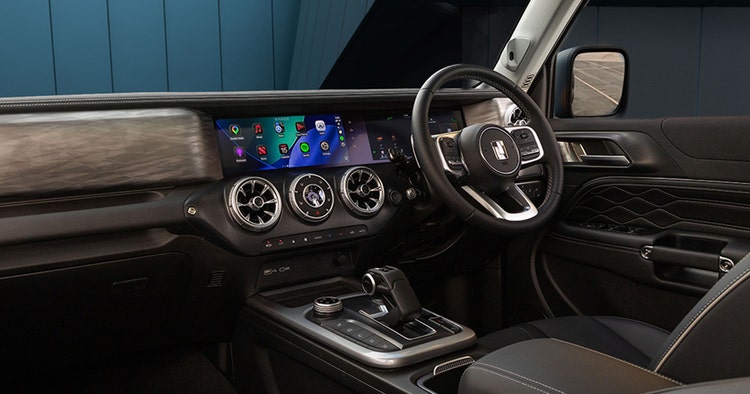
The Tank’s rugged exterior design is definitely carried over into the cabin with a purposeful design, from its chunky three-spoke steering wheel, round air vents and the fighter jet-style gear shifter in the centre console.
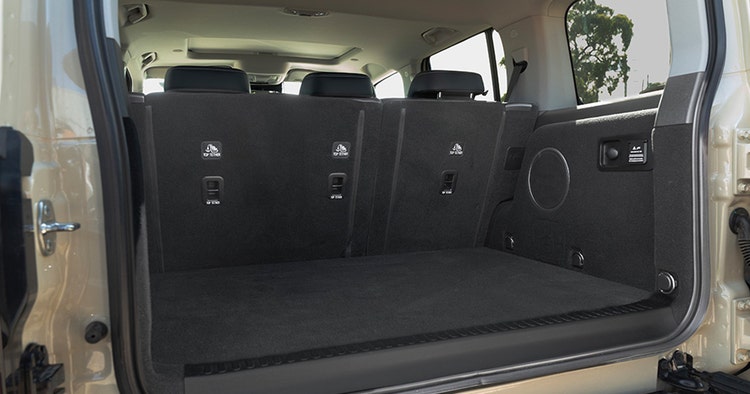
There’s plenty of space too, with excellent headroom and a generous amount of legroom in the rear, and the general ambience is modern and upmarket with good quality materials throughout.
Really, there’s nothing different about the PHEV versions from their conventionally powered siblings.
However, that means it also carries over their foibles too. Namely a terrible user interface for the infotainment system and frustrating ergonomics.
While plenty of physical buttons exist on the centre console and centre stack for the 4WD gear and climate control, there’s not a single hard switch that allows the driver to toggle between the three hybrid drive modes, or even shortcut the infotainment display to the relevant page.
You can set a custom button for the pull-down menu, but that only works when you’re using the native infotainment software – if you’re in Android Auto or Apple Carplay, that’s locked out until you prod the screen at least twice to exit smartphone mirroring, then a swipe and another prod to get the toggle actually on screen.
Does your passenger need to change the volume? Most cars would provide a knob to twirl, but GWM puts those controls on the driver’s side of the infotainment display, well out of reach of the passenger, and renders them as annoying touch-sensitive controls.
What is under the bonnet of the GWM Tank 300 Hi4-T PHEV?
The GWM Tank 300 PHEV pairs a 2.0-litre turbo petrol four-cylinder that produces 180kW and 380Nm with an electric motor sandwiched between it and the nine-speed automatic transmission.

The net result is combined maximum outputs of 300kW and 700Nm, which is significantly higher than the regular petrol engine that generates 162kW and 380Nm, and the 2.4-litre turbo diesel that produces 135kW and 480Nm.
Supported by a 37.1kWh battery, the Tank 300 PHEV carries enough charge to operate independently of combustion for up to 115km.
If you replenish the battery religiously (it can charge at up to 50kW on DC power), and you’ll quite possibly over-achieve against the official efficiency claim of 1.9L/100km on the NEDC cycle, given the battery contains enough energy for the bulk of Aussie drivers to see out their daily commute without needing a voltage top-up.
What is the GWM Tank 300 Hi4-T PHEV like to drive?
With the drive mode set to Hybrid and with the combustion engine already woken up, off-the-line acceleration is remarkably swift for a 2.6-tonne ladder-framed off-roader.

Do a hard launch in Expert Mode (which allows all electronic aids to be deactivated) in 2WD, and the GWM Tank 300 Hi4-T has no trouble roasting its rear Michelin Primacy SUV tyres.
Do the same in 4WD high on gravel, and it feels just as rapid, spinning all four wheels with ease and taking the Tank to triple-digit speeds like it’s a hot hatch – though the computer warns you if you go above 80km/h in 4WD high.
But most of the time you won’t be looking to win stoplight drag races. Mooching about town in Hybrid or Intelligent mode is where the Tank 300 PHEV is at its best, with its electric motor gently taking you from standstill all the way through to highway speeds if you don’t mind a sedate pace, while a more assertive push on the throttle wakes up the combustion engine to easily keep up with – or stay ahead of – other traffic.
In EV mode, it’s more than sufficient for dealing with the daily commute – and arguably should stay in that mode most of the time if you want to unlock its money-saving capabilities (a full charge will only set you back about $9.30 at an energy price of $0.25 per kWh).
What about when you want to escape the city? We went for a 440km road trip and recorded an average fuel burn of 5.7 L/100km, which isn’t bad considering we also spent a bit of time testing the performance limits of its powertrain along the way.
Another good thing: there’s little compromise when it comes to the Tank 300’s other capabilities. The maximum tow rating is still 3000kg (though you’ll need to run the combustion engine all the time in Tow mode), you still have the same switchable dual-range 4WD system and all of the other off-road-specific features like its multi-terrain modes, see-through chassis camera, and ‘Tank Turn’ function (though it’s pretty graunchy and difficult to use).
However, one uniquely annoying aspect to the PHEV is the languid response of the hybrid system to sudden demands for acceleration.
If the car is coasting along with electric drive, flooring the accelerator can take an uncomfortable length of time before additional power is actually delivered, making swift overtakes on country roads more of a gamble than they should be.
At the opposite side of the dynamic coin, heavy deceleration on loose surfaces can see a concerning degree of yaw even when all traction aids are active.
Refinement could also use improvement. The powertrain is generally silky-smooth, but the stiff-legged suspension isn’t unless you’re driving on a billiard table. Corrugated gravel roads are particularly tooth-rattling.
How much does the GWM Tank 300 Hi4-T PHEV cost to maintain?
Like all GWM models, the Tank 300 PHEV is covered by a standard seven-year, unlimited-kilometre warranty, with the battery pack guaranteed for an extra year.

Included at the time of purchase is one-year free roadside assistance, which is reactivated every 12 months (up to seven years) if the vehicle is maintained through the GWM dealership network.
The vehicle requires servicing every 12 months or 15,000km (after the first year which has a 10,000km interval) with a capped price scheme that costs $3370 over seven years, or an average of $481 per annum.
Should I lease a GWM Tank 300 Hi4-T PHEV?
From a fiscal point of view, the 2026 GWM Tank 300 Hi4-T PHEV Ultra makes a huge amount of sense for the off-road enthusiast who loves to get dirty, but doesn’t like the way the diesel price chart is trending.
With the prospect of being able to leverage low-cost (or no-cost) energy for the bulk of your daily drive, it appears well worth the premium.
It’s not perfect, that’s for sure, but the addition of a genuinely emissions-free option in the offroad wagon space – and one that’s largely compromise-free – is certainly welcome in this day and age.
2026 GWM Tank 300 Hi4-T PHEV Ultra at a glance:
Editor’s Rating: 7.6/10
$61,990 (drive-away)
Now
2.0-litre 4-cylinder turbo petrol-electric
180kW/380Nm (electric motor: 120kW/320Nm)
300kW/700Nm
9-speed automatic
37.1kWh NMC
115km (NEDC)
32.2kWh/100km
1.9L/100km
43g/km
5-star (2022)
Disclaimer: Images supplied by carsales
Explore GWM Tank 300 Novated Leasing
A GWM Tank 300 novated lease may help eligible employees package their car and running costs into one regular payment. Learn more about GWM novated leasing, how a novated lease works, and use our novated lease calculator to estimate your potential costs and savings.