

BYD Shark 6 Performance 2026 Review
BYD’s new flagship ute brings more power, improved off-roading and 3.5-tonne towing for only $5000 more – so what’s the catch?

By carsales.com.au
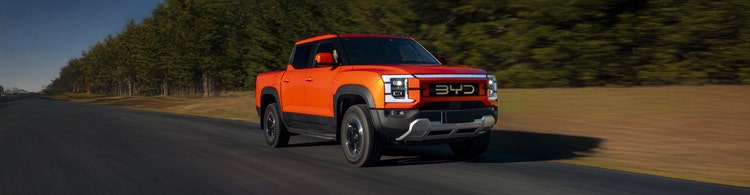
The BYD Shark 6 has been a big catch for the burgeoning Chinese car brand.
First launched in late 2024 as Australia’s first plug-in hybrid dual-cab ute, it has taken a decent chunk of sales away from popular rivals like the Ford Ranger and Toyota HiLux in its first full year on-sale, finding more than 20,000 new customers largely thanks to its sharp sub-$60k price tag, sharp styling and long list of standard equipment.
Now, the lineup is expanding with a hard-working cab-chassis variant targeted at fleet buyers, along with a more powerful and quicker Performance flagship that finally unlocks the industry standard 3500kg towing capacity – all for a modest $5000 premium.
Which begs the question: why does BYD predict only a quarter of Shark 6 buyers will choose it?
How much does the BYD Shark 6 Performance cost?
The expansion of the 2026 BYD Shark 6 range now sees the lineup kick off from $55,900 plus on-road costs for the new Dynamic cab-chassis variant and top out at $62,900 for the new flagship Performance pick-up.
Bridging the pair, and going all but untouched (for now), is the Shark 6 Premium (from $57,900). Until now, it’s been the sole Shark 6 variant offered Down Under and it’s likely to remain the top-seller – BYD Australia COO Stephen Collins expects around 55 per cent of buyers to pick it.
We’re concentrating on the Shark 6 Performance here, because it finally unlocks the industry standard 3500kg braked towing capacity, bringing the Shark 6 into line with heavyweight utes like the Toyota HiLux, Ford Ranger, and Isuzu D-MAX.
What standard equipment does the BYD Shark 6 Performance feature?
Upgrades to the BYD Shark 6 Performance over the Premium are mostly related to what’s under the bonnet, which we will cover soon.
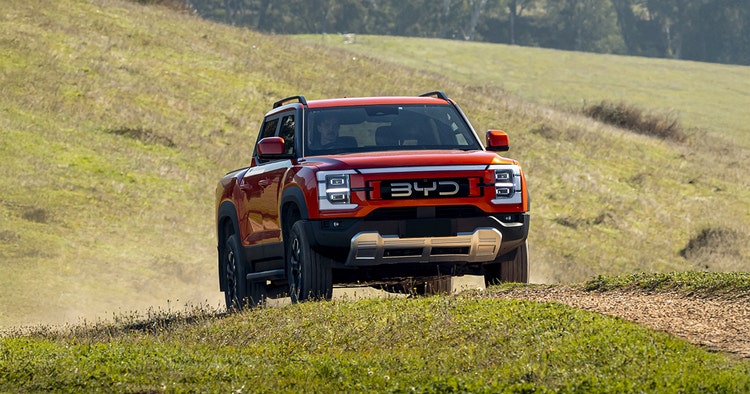
Otherwise, they both share a long list of standard equipment that includes:
- LED head lights and tail lights
- Roof rails
- Privacy glass
- 18-inch alloy wheels
- Keyless entry with push button start
- Synthetic leather trim
- Power adjustable front seats
- Heated and ventilated front seats
- Dual-zone climate control with rear air vents
- 10.25-inch digital instrument cluster
- 15.6-inch infotainment touch screen
- DAB+ digital radio
- Bluetooth connectivity
- Apple CarPlay and Android Auto
- Over-the-air software updates
- 11-speaker Dynaudio audio system
- Wireless phone charger
The only additional elements that are standard in the Performance version are the inclusion of a NFC key card and embedded Google Maps as the sat nav platform.
What safety features does the BYD Shark 6 Performance have?
Similarly, the BYD Shark 6 Performance comes equipped with the same comprehensive suite of advanced crash avoidance systems and autonomous driver aids as the Premium, including:
- Autonomous emergency braking
- Forward collision warning
- Adaptive cruise control
- Lane keeping assistance
- Rear collision warning
- Rear cross traffic braking
- Blind spot monitoring
- Traffic sign recognition
- Driver attention monitoring
- Front and rear parking sensors
- 360-degree parking display
- Head-up display
What is the BYD Shark 6 Performance like inside?
From the outside, there’s nothing to differentiate the Performance and Premium models which share the same LED lighting signatures front and rear as well the 18-inch alloy wheels. There isn’t even a ‘Performance’ badge on the tailgate.
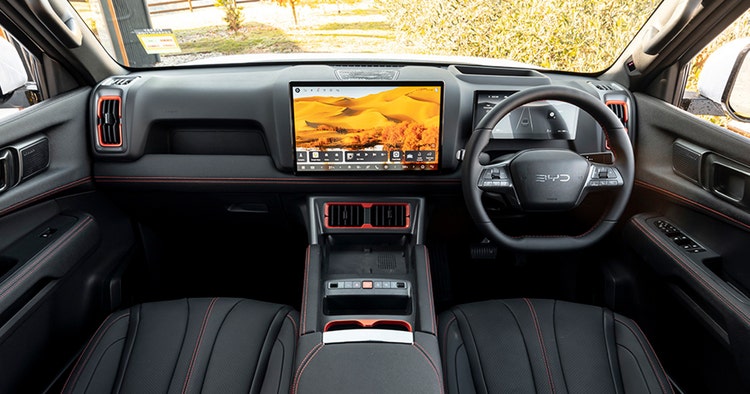
Inside the cabin however, there are some important changes we’re told will eventually trickle into the entire Shark 6 range as part of a mid-life update. That includes a new faux leather-wrapped steering wheel (no more real leather) which feels slightly more porous and grippier than the current wheel.
The drive mode toggles on the bottom section have also been moved to a small toggle on the centre console, and the traditional gear stick has been replaced by a stalk on the right-hand side of the steering wheel.
It means there’s now an additional storage area in the console, but it also shifts exterior lighting controls to the touchscreen – yep, the headlight function is now embedded in the screen – because the stalk is gone. That’s likely to be a big turn-off for buyers that prefer tactility.
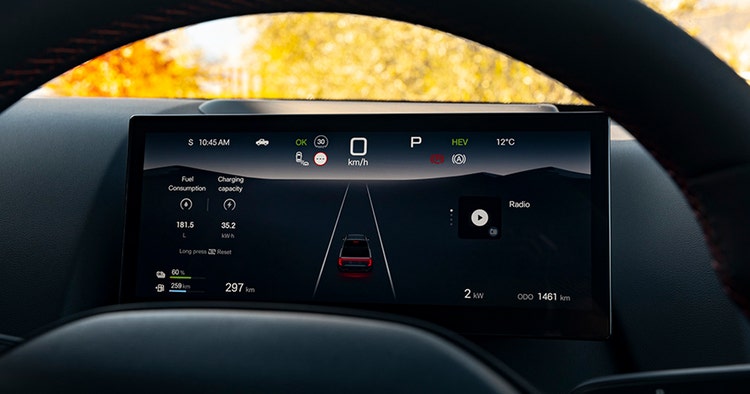
The same goes for the assortment of toggle style switches (start/stop, HEV/EV etc) which have also been replaced with a flush row of buttons.
The changes make for a more seamless and uncluttered cabin but also remove the unique touches that made the Shark a more interesting ute in the first place.
What is under the bonnet of the BYD Shark 6 Performance?
The increased capability – and hence the Performance badge - comes courtesy of a more powerful turbocharged 2.0-litre four-cylinder petrol engine and larger front 200kW e-motor, both borrowed from the Denza B8 SUV which lifts combined outputs to a whopping 350kW/700Nm.
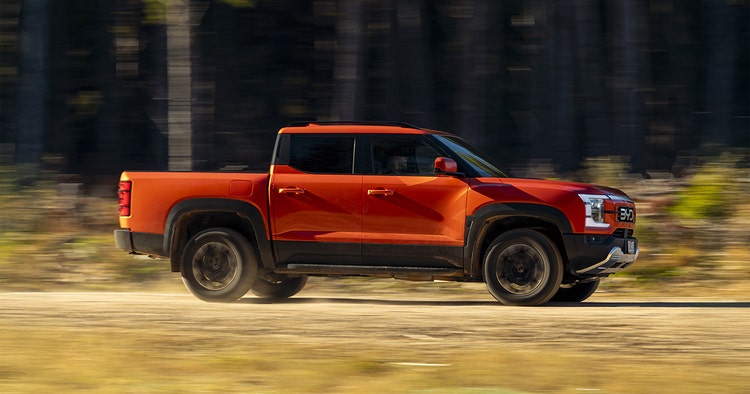
That’s a 29kW/50Nm improvement over the hardly underpowered Premium (which gets a smaller 1.5-litre engine) and means acceleration has improved, with a claimed 0-100km/h sprint of 5.5 seconds (down from 5.7sec). It also only weighs 65kg more, tipping the scales at 2775kg.
The Performance runs the same 29.6kWh LFP battery pack as the Premium, which BYD claims can deliver up to 80km of EV-only driving range and fuel consumption figures between 1.3L/100km and 10.5L/100km depending on the battery’s state of charge.
The battery can be replenished via AC charging up to 7kW and DC charging up to 55kW, while two levels of regenerative braking and three terrain modes (Mud, Sand, Snow) also feature, along with the new Crawl mode, which we’ll cover soon.
Mechanically, the only changes beyond the powertrain and re-valved dampers are beefed up front brakes: larger pads and 346mm discs (the Premium runs 323mm front rotors).
Strangely, this isn’t reflected on BYD’s official spec sheet, but we got this info from BYD Australia chief product officer, Sajid Hasan.
What is the BYD Shark 6 Performance like to drive?
The 2026 BYD Shark 6 Performance is arguably the ute the Shark 6 should’ve always been.
The big news? The original model’s most obvious flaws – a 2.5-tonne braked towing limit and a traction control system that hindered its off-road performance – have been addressed, thanks to added power and new dedicated Crawl mode.
It was never designed to be a mud-plugging off-road hero and there’s still no mechanical locking differentials or traditional low-range transfer case here, but Crawl mode tweaks the traction control system to minimise wheel spin in slippery and rocky terrain and limits speed to around 20km/h (BYD says it works best around 12km/h).
Happily, although it debuts on the Performance, it’ll soon be added to the existing Premium (and Dynamic) grade via an over-the-air (OTA) update, meaning every version of the PHEV ute will benefit from improved off-road performance.
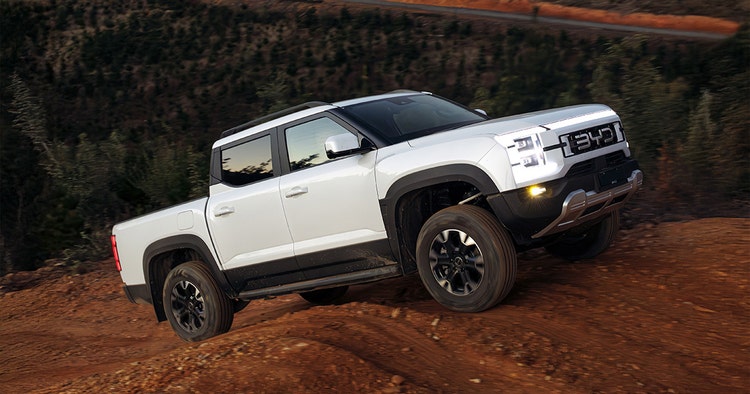
In practice, it seems to work well, although it must be noted that our brief experience during the local launch was limited to some fairly tame off-road tracks. Only once did we get caught out – when tackling a steep and slippery dirt incline full of ruts.
But after slowing to a halt around a quarter of the way up when it lost traction, we gave it a moment, planted the right foot (on the advice of our BYD tech man) and eventually moved off again, without even rolling back.
It seems to take a moment to work out where torque is needed and then eventually sends it there. I should also note, we were on factory-standard Continental rubber at the time, so expect it to be more capable with the right shoes.
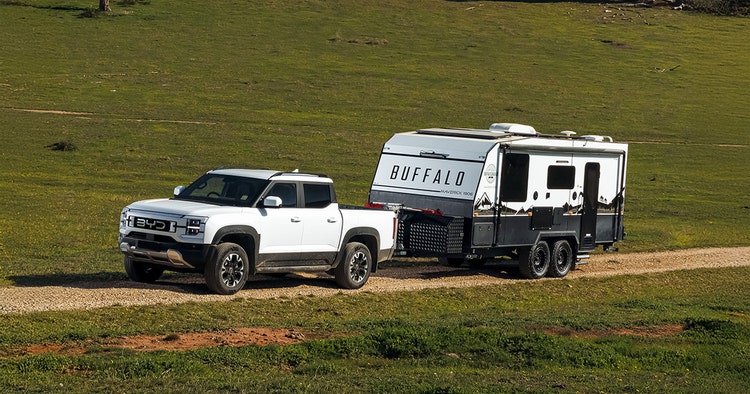
The major story here, however, is its new 3.5-tonne braked towing capacity.
We had a quick go behind the wheel of a Performance hooked up to a 2.7-tonne caravan and came away impressed at how confident and assured it felt on the move.
Sure, you know you’re lugging something heavy, but it seamlessly gets power down and speeds up with impressive force.
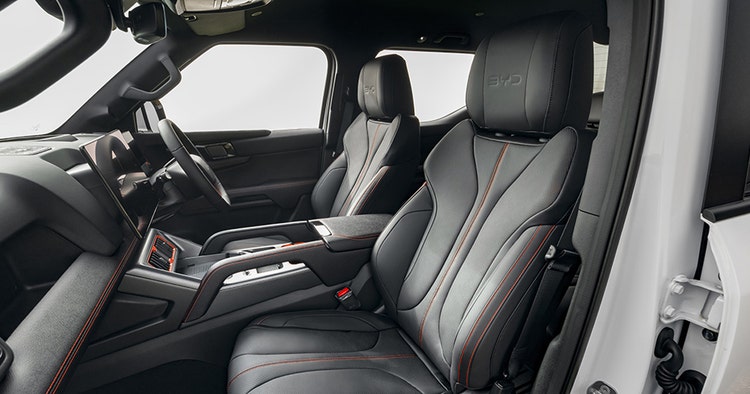
Unladen on road, it’s as good as we’ve found the Shark 6 to be, with a ride quality that outshines just about every turbo-diesel dual-cab on the market and light steering, plenty of driver aids (which aren’t extremely annoying unless you yawn too much) and a cabin that feels much more SUV-like than tradie ute.
How much does the BYD Shark 6 Performance cost to maintain?
The 2026 BYD Shark 6 Performance is covered by the manufacturer’s standard six-year/150,000km warranty while the battery pack is guaranteed for eight years and 160,000km.
BYD provides 12 months of free roadside assistance, and the Shark 6 Performance requires maintenance every 12 months or 20,000km with a five-year capped price servicing scheme costing $2489 – at an average of $497 per annum.
Should I lease a BYD Shark 6 Performance?
The 2026 BYD Shark 6 Performance is proof BYD is listening to Aussie buyers, and the new variant finally brings the pioneering ute to the level many argue it should’ve been at from the start.
It seems strange that for just $5k more BYD doesn’t expect it to be all that popular with local buyers.
According to COO Stephen Collins, just 25 per cent of buyers will opt for the Performance, while around 55 per cent will stick with the Premium.
He did admit however, that planning assumptions are often wrong, so time will tell.
For now, our first taste is a positive one.
2026 BYD Shark 6 Performance at a glance:
Editor’s Rating: 7.9/10
$62,900 plus on-road costs
Now
2.0-litre 4-cylinder turbo petrol-electric
180kW/380Nm (front electric motor: 200kW/360Nm, rear: 150kW/340Nm)
350kW/700Nm
Single-speed reduction gear
29.6kWh lithium-iron phosphate
80km (WLTP)
1.3L/100km (battery SoC above 25%); 10.5L/100km (battery SoC below 25%)
23g/km (WLTP)
Five-star (ANCAP 2025)
Disclaimer: Images supplied by carsales
Explore BYD SHARK 6 Novated Leasing
A BYD SHARK 6 novated lease may help eligible employees package their car and running costs into one regular payment. Learn more about BYD novated leasing, how a novated lease works, and use our novated lease calculator to estimate your potential costs and savings.