

BYD SEAL 6 2026 Review
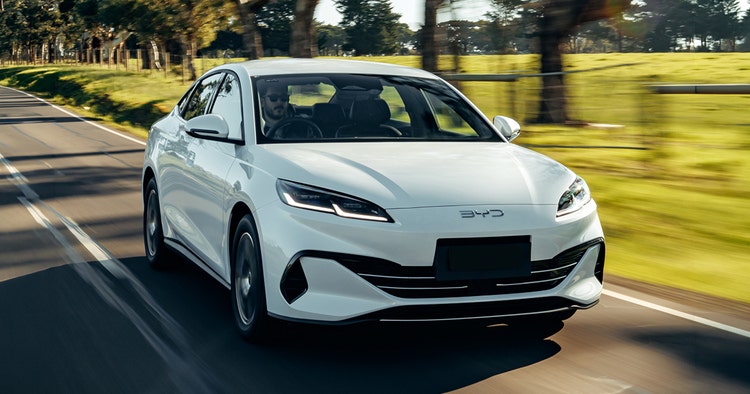
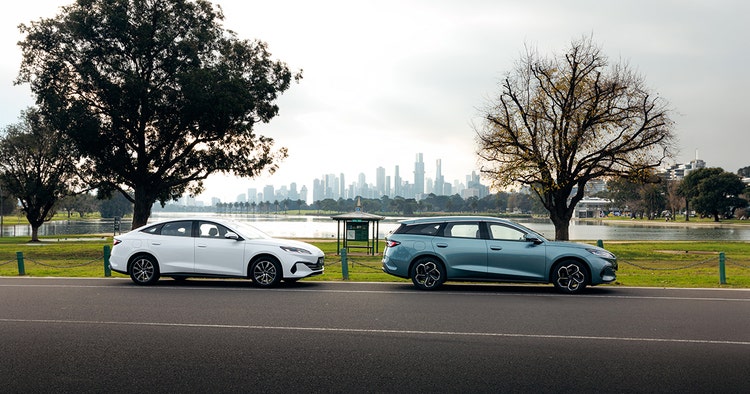
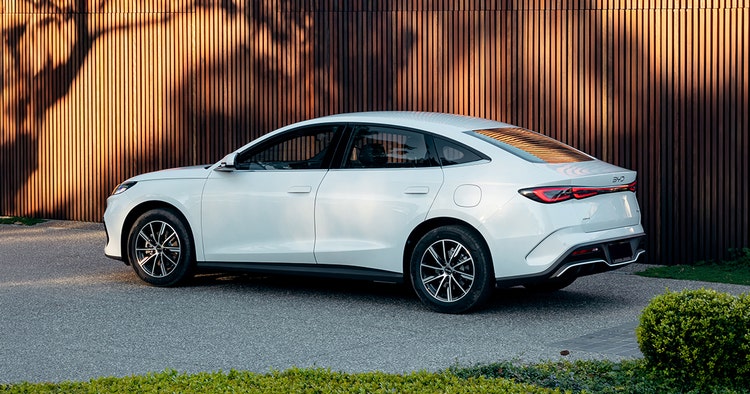
Available in both sedan and wagon body styles, the SEAL 6 adopts a more advanced plug-in hybrid petrol-electric powertrain.


By carsales.com.au
BYD has bold ambitions to become Australia’s most popular new-car brand.
The Chinese car maker is building family-friendly and eco-friendly models that are aimed directly at Toyota’s fleet, and its latest arrival – the BYD SEAL 6 - is ready to take on the evergreen Camry.
With a competitive price tag, a generous list of standard equipment and more than 1,000km of driving range, the SEAL 6 makes a strong statement from the outset and serves as BYD’s bid to revive the humble family car – all while single-handedly trying to make wagons great again.
How much does the BYD SEAL 6 cost?
BYD has positioned the SEAL 6 sedan and Touring slightly differently, with the four-door only available in entry-level Essential trim and the wagon as a higher-grade Premium variant.
Pricing starts at $34,990 plus on-roads for the sedan, while the Touring costs just $5,000 more.
Underpinned by BYD’s DM-i 5.0 platform, both variants ride on a 2,790mm wheelbase and measure almost identical externally: 4,840mm long and 1,875mm wide, with the wagon standing slightly taller at 1,505mm (+10mm).
What standard equipment does the BYD SEAL 6 feature?
BYD has included a generous list of standard equipment across both models, including:
- LED headlights and taillights
- Keyless entry with push button start
- NFC and digital keys
- Synthetic leather trim
- Power adjustable front seats
- Climate control air conditioning with rear air vents
- Power windows
- 8.8-inch digital instrument cluster
- 12.8-inch infotainment touchscreen
- Bluetooth connectivity
- DAB+ digital radio
- Over-the-air software updates
- Apple CarPlay and Android Auto
- 6-speaker audio system
The Touring Premium adds:
- 18-inch alloy wheels
- Panoramic sunroof
- Power operated tailgate
- Heated and ventilated front seats
- 4G cloud services with 2GB/month for the first two years
- Wireless phone charger
What safety features does the BYD SEAL 6 have?
Both versions are equipped with a comprehensive suite of advanced semi-autonomous driver aids and crash avoidance systems, including:
- Autonomous emergency braking
- Forward collision warning
- Rear collision warning
- Adaptive cruise control
- Lane keeping assistance
- Blind spot detection
- Traffic sign recognition
- Rear cross traffic alert
- Rear parking sensors
- Reverse parking display
- Eight airbags
- Driver attention monitoring
The Touring comes with a few additional features, including front parking sensors and a 360-degree parking display.
What is the BYD SEAL 6 like inside?
The 2026 BYD SEAL 6 Touring we test drove from Sydney to Melbourne is pitched as budget-friendly family hauler for those that don’t want an SUV, and it’s unique in having no direct rivals.
That is, unless you count the plugless hybrid Toyota Camry, or similarly sized EVs like the Tesla Model 3 and BYD’s very own SEAL. In terms of plug-in hybrid wagons, you could also look at the CUPRA Leon range, but only if you’re willing to fork out at least another $20K.
At this price point, and with the level of standard equipment on offer, the SEAL 6 Touring makes a strong argument.
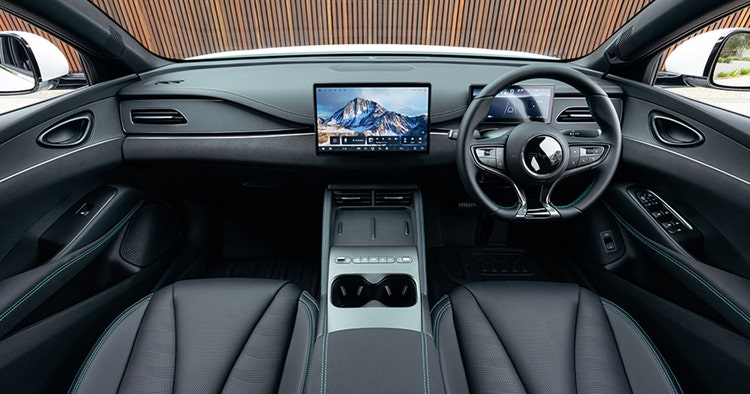
It doesn’t move the needle in terms of technology within the cabin – in fact, you could even argue it’s gone backwards given BYD’s removal of the quirky rotating touchscreen, which you won’t find in the SEAL 6.
Rear seat space is good for a few adults, but it certainly doesn’t feel as spacious as a Camry. It’s a space better suited to kids, who’ll appreciate the flat floor, pair of USB ports, huge glass roof, map pockets and centre armrest with cupholders.
In terms of its wagon status, the SEAL 6 Touring’s on-paper specs sound generous because its 670-litre boot capacity was measured to the ceiling.
It sounds huge and marks a sizeable difference compared to the Camry’s 524L, but the reality is it’s narrow and not all that deep. In fact, you could probably fit as much stuff in the boot of a Camry, but we’d be happily proven wrong when we can get our hands on both for a comparison.
What is under the bonnet of the BYD SEAL 6?
Both the sedan and Touring use the same 70kW/120Nm 1.5-litre four-cylinder petrol engine, but the sedan is fitted with a 10kWh battery pack and has maximum combined outputs of 130kW/210Nm whereas the Touring has a larger 19kWh battery and more powerful electric motor that increases outputs to 163kW/260Nm.
BYD says both can travel more than 1,000km with a full tank of fuel and a full battery while the EV-only driving range differs dramatically based on the battery pack: 55km for the sedan and 100km for the wagon.
Bold efficiency claims of 0.8L and 1.1L per 100km for the wagon and sedan respectively (as long as the battery pack is above 25%) are also touted, but once the battery is out of juice, expect upwards of 4L/100km depending on driving conditions.
The ‘electric-first’ powertrain features what BYD says is the “world’s first” 12V lithium-iron phosphate starter battery, rather than a traditional lead acid unit that requires replacement every five or so years.
Claimed to last the lifespan of the vehicle, the Chinese brand is touting it as a maintenance-free low-cost addition.
What is the BYD SEAL 6 like to drive?
It drives better than you might expect for the price too, with a softer suspension setup skewed toward comfort rather than sportiness, and it soaks up road imperfections without crashing about and shaking up passengers.
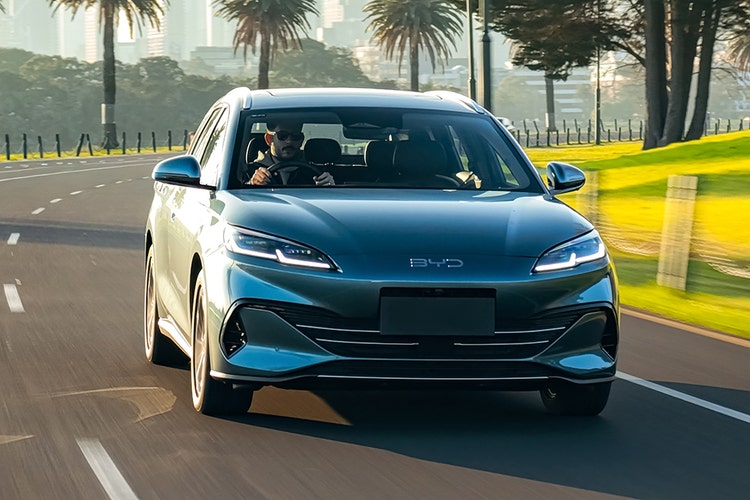
There’s decent grip from its Continental rubber and despite it sending all 163kW through the front wheels, it manages to maintain traction easier than some other PHEVs we’ve tested.
Two-stage regenerative braking is offered but honestly both settings offer similar levels of feel.
After our 1,000km road trip – 996.3km to be exact – from Sydney to Melbourne, just about our only gripe was the noisy cabin, which struggled to subdue wind noise at highway speeds and the loud petrol engine when it’s revving hard to recharge the battery pack.
We should also mention we conquered the trip – the first half of which we were bound to the Hume Highway – on a full tank of fuel and full battery, arriving in Melbourne with 68km of combined driving range to spare.
The challenge meant we weren’t allowed to recharge the battery, so arriving with a combined consumption claim of 4.5L/100km was impressive – not far off BYD’s 4.1L claim.
How much does the BYD SEAL 6 cost to maintain?
Both models are covered by a six-year, 150,000km warranty and the high-voltage battery is guaranteed for eight years and 160,000km, which is all pretty standard.
But here’s the rub: Servicing is more convoluted because the SEAL 6 has two odometers; one for the hybrid system and one for the vehicle itself.
So, while visits to the workshop are scheduled at 12-month intervals, BYD says it depends on how the vehicle is driven as to whether you’ll need it serviced every 10,000km or 20,000km.
The naturally aspirated 1.5-litre engine runs an unusually high 16:1 compression ratio and is designed to regularly operate at its peak power/torque range of 4,000rpm.
Therefore, it requires maintenance every 12 months/10,000km, meaning BYD’s 20,000km distance intervals only count if you’re driving it in pure EV mode permanently – a very unlikely scenario for most people.
Either way, BYD says the vehicle’s two odometers will alert the owner when it’s time for maintenance.
At least pricing for the first five visits (excluding the first complimentary visit at 3,500km) is locked in, totalling $2,775, which is average for a PHEV. That said, you should put some money aside for year four’s $1,225 service – that’s a big one.
Should I lease a BYD SEAL 6?
The 2026 BYD SEAL 6 Touring is a compelling budget-friendly plug-in hybrid, but it arrives in a segment that isn’t exactly booming – kept alive these days by three vehicles: the Tesla Model 3, BYD SEAL and of course, the evergreen Toyota Camry.
Whether entering a more niche segment will work in BYD’s favour remains to be seen.
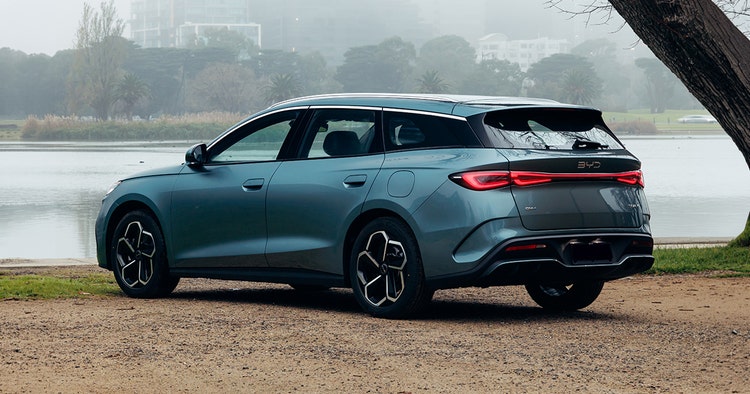
In any case, there’s a lot to like about this wagon: the price, the driving experience and the amount of standard equipment and safety gear on board.
Like anything though, there are things to consider before you sign, like the fact there are wagons (and sedans) out there with more spacious cabins and boots, the second row is better suited to kids, and the SEAL 6's complex service intervals could mean more frequent maintenance than you thought you were signing up for.
2026 BYD SEAL 6 Touring at a glance:
Editor’s Rating: 7.2/10
$39,990 (plus on-road costs)
Now
1.5-litre four-cylinder petrol-electric
70kW/120Nm (electric motor: 160kW/260Nm)
163kW/260Nm
Single-speed automatic
19kWh Blade battery
100km (WLTP)
11.8kWh/100km (WLTP)
0.8L/100km (WLTP, SoC >25%)
17g/km (WLTP)
Five-star (ANCAP 2025)
Disclaimer: Images supplied by carsales
Explore BYD SEAL 6 Novated Leasing
A BYD SEAL 6 novated lease may help eligible employees package their car and running costs into one regular payment. Learn more about BYD novated leasing, how a novated lease works, and use our novated lease calculator to estimate your potential costs and savings.