

BMW iX3 2026 Review
BMW’s multi-billion-dollar Neue Klasse gamble has yielded impressive results but how does the six-figure iX3 stack up against more affordable modern rivals?


By carsales.com.au
BMW has made no secret just how much money it’s poured into the development of its Neue Klasse future and the resulting iX3 is a vehicle it can’t afford to get wrong.
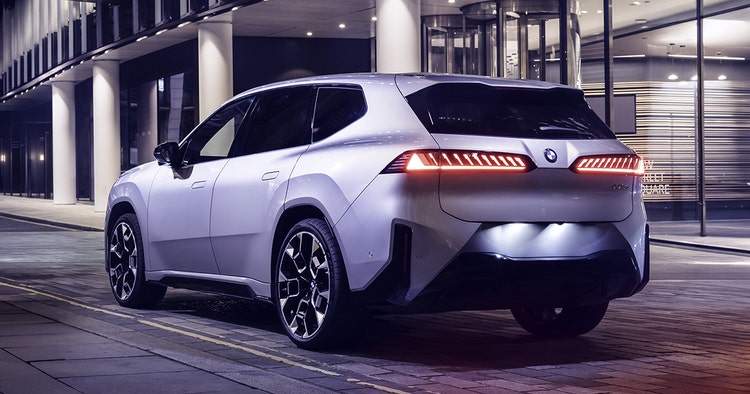
On first impressions, there’s a lot that’s right about the Bavarian brand’s new mid-size electric SUV – it looks bold, is filled with the latest in technology and feels proper luxe. It’s also a hoot to drive.
But the automotive landscape is shifting rapidly and if there’s one thing budget-friendly Chinese EVs and mainstream rivals have proven, it’s that rapid acceleration and cool gadgets are no longer exclusive. So, is the iX3 worth the extra spend over a top-spec Tesla Model Y or Zeekr 7X?
Let’s find out.
How much does the BMW iX3 cost?
The 2026 BMW iX3 range arrives in Oz from $109,900 before on-road costs for the flagship dual-motor 50 xDrive, which will be joined by the more affordable rear-drive iX3 40 ($89,900) before the end of the year.
That positions it in the same ballpark as the more conventional, petrol and diesel-powered X3 range, which starts at $88,100 (plus on-roads) for the entry-level 2.0-litre turbo petrol model and tops out at $131,400 (plus on-roads) for the high-performance M50 xDrive.
But it means the iX3 costs more than some of its battery-powered rivals, such as the Tesla Model Y that starts from $58,900 (plus on-roads) for the base-model RWD Premium, or the Zeekr 7X that costs $1000 less for the entry-level RWD version.
What standard equipment does the BMW iX3 feature?
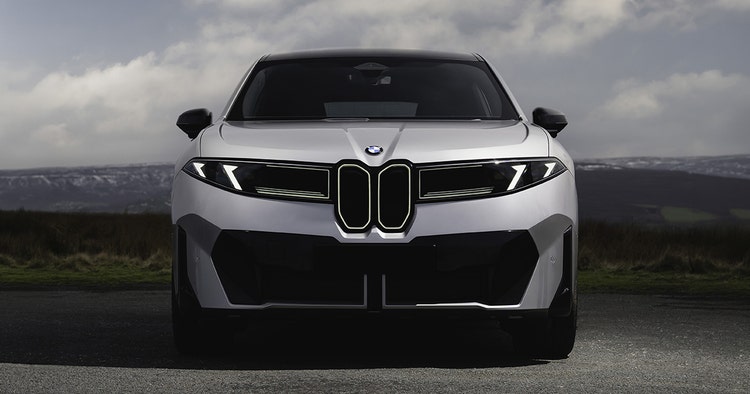
As you’d expect, the range-topper – the only grade available from launch – comes fully loaded with an extensive list of standard equipment, including:
- 20-inch alloy wheels
- LED headlights and tail lights
- Power operated tailgate
- M Sport exterior package
- Keyless entry with push button start
- Digital Key
- Dual-zone climate control
- Synthetic leather trim
- Heated front seats
- Panoramic sunroof
- Ambient interior lighting
- Panoramic iDrive display
- Central touchscreen
- Bluetooth connectivity
- Embedded sat nav
- DAB+ digital radio
- Wireless smartphone mirroring
- Wireless phone charging
- Harman Kardon audio system
What safety features does the BMW iX3 have?
Safety is just as extensive with a comprehensive suite of advanced driver aids and crash avoidance systems, including:
- Automated emergency braking
- Adaptive cruise control
- Lane keeping assistance
- Road priority warning
- Reverse emergency braking
- Front and rear parking sensors
- 360-degree parking display
- Nine airbags
What is the BMW iX3 like inside?
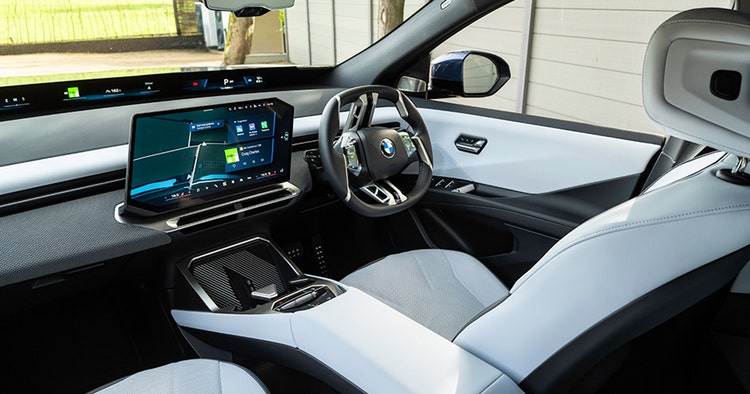
Inside, BMW has nailed the cabin. Sustainable materials meet a striking, edgy interior headlined by the huge, customisable panoramic iDrive display that brings a real wow-factor – you can even project one of five BMW Art Cars (or all of them at once!) across the dash.
The quirky twin-spoke M Sport steering wheel (one of four options) feels great underhand and while it’s not as thick as the tiller in other modern Bimmers, it fits in hand very nicely.
Radical as it is, there really isn’t much in the way of interior storage options. The central lidded armrest is tiny, and the glovebox isn’t huge either.
Good thing there’s a large bin/tray between the driver and passenger seat, but there’s no cover or lid, meaning anything you put there will be exposed.
Like many modern vehicles, the cabin is almost entirely stripped of physical buttons – save for an important few – meaning common controls, including the climate control functions, are buried in the central display.
From a mid-size SUV perspective, it gets most other things right – the second row is spacious enough for a pair of adults and there’s plenty of amenities while a 520-litre boot is generous but not groundbreaking. However, there’s a 58-litre frunk (front trunk) that lives under the bonnet for extra storage.
What is under the bonnet of the BMW iX3?
At the heart of the iX3 is BMW’s Gen6 eDrive system, which runs an 800V architecture, boasts 345kW/645Nm outputs from a dual-motor all-wheel drive setup and wedges in a very large 108kWh battery pack, equipped with Bimmer’s new round cell tech.
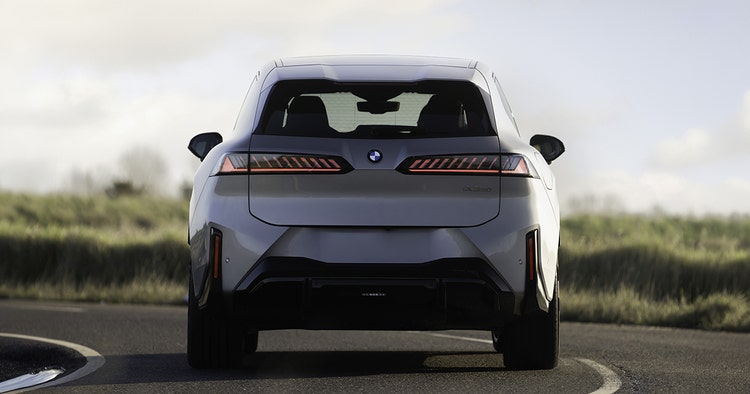
The promise of up to 805km of driving comes with the 50 xDrive – which also nabs ultra-fast 400kW DC charging capabilities – while the cheaper 235kW iX3 40 coming later this year gets a smaller 82kWh battery for a claimed 635km of range.
Using a rapid 400kW DC fast-charger, BMW claims the battery can be replenished from 10 to 80 per cent in just 20 minutes.
Unfortunately, those are still few and far between in Australia, but BMW says you can add around 370km of range in 10 minutes on the more common 150kW charger.
The clever NMC battery pack also runs its own cooling system for each row of cells, akin to an air-con gas system able to heat and cool the battery.
There's even a clever AI-powered charging flap that learns your habits and uses GPS to work out when you’ve arrived in your regular charging spot (i.e. your garage) to conveniently open the charging flap, ready for you to plug in.
What is the BMW iX3 like to drive?
When you’re staring down a six-figure price tag, you expect a luxury EV to do more than just tick a few boxes. And, thankfully, the all-new 2026 BMW iX3 delivers where it counts.
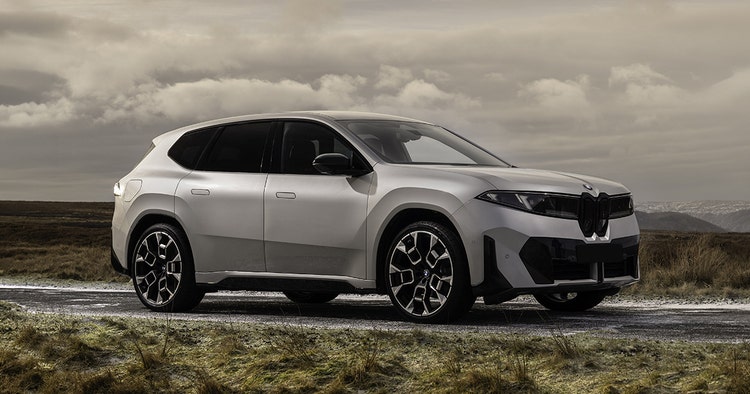
On winding country roads, the iX3 strikes a sublime balance: it’s nimble, athletic, and feels genuinely quick (yet not sickeningly so), yet remains wonderfully composed and comfortable over rougher Aussie tarmac.
Even though it doesn’t use the typical adaptive dampers or air suspension found in many high-end machines, the ride and handling experience is top notch. Even paired with our test car’s 20-inch wheels (wrapped in Nexen rubber) it proved very capable at smoothing out potholes and lumpy roads, while still providing decent levels of grip when cornering with enthusiasm.
There are some cool tech inclusions when it comes to the driving experience, including what BMW execs describe as the ‘calmest, smoothest stop in any car’ thanks to the rear e-motor’s ability to take out the very last bit of travel to ensure a chauffeur-like stop.
It’s clear BMW’s Neue Klasse investment yields an impressive piece of engineering, but the reality is, the iX3 doesn’t come cheap.
Thankfully, the more affordable 40 coming in Q4 is priced just below the Luxury Car Tax (LCT) threshold, making it eligible for FBT exemptions.
But at $110,000 before on-road costs, the flagship iX3, as good as it is, asks a massive $35,000 premium over high-selling disruptors like the Tesla Model Y and Zeekr 7X – which could make the iX3 difficult to reconcile particularly when you look at their spec sheets side by side.
Another downer comes in the form of its claimed driving range, which BMW says drops by around five per cent every inch in wheel size you go up. So, if you opt for the big sexy 22s (for an extra $7700), expect driving range to drop by around 10 per cent to between 630-650km.
That’s certainly true for the second iX3 tester (fitted with 22s) we jumped in at the local launch, which showed around 326km of available driving range at 50 per cent battery and an average energy consumption figure of 17.5kWh/100km after a predominantly highway drive.
We’re keen to spend more time with the iX3 to find out just how efficient it is.
Ultimately, just how much driving range you’ll achieve will come down to your driving style and the type of driving you’re doing. Oh, and if you plan on utilising its 2000kg factory towing option ($2,000), that’ll obviously affect it too.
How much does the BMW iX3 cost to maintain?
BMW covers the iX3 with a five-year/unlimited-kilometre vehicle warranty and an eight-year/160,000km warranty for the high-voltage system.
Meanwhile, condition-based service packs are offered for four ($5,535) or six ($6,615) years.
Should I lease a BMW iX3?
Let’s not sugarcoat it: $110,000 is a lot of money for a mid-size electric SUV in today’s competitive market, but the 2026 BMW iX3 50 xDrive is a lot of car for the money.
It’s also a very exciting, tech-laden first taste of what’s to come for the Bavarian marque’s Neue Klasse architecture.
Whether it’s enough to steer cost-of-living-affected Aussies out of cheaper options – for which there are plenty here and even more coming – remains to be seen.
For now, it’s an impressive machine that comes with a lot of promise… for those prepared to pay the price.
2026 BMW iX3 50 xDrive at a glance:
Editor’s Rating: 7.8/10
$109,900 (plus on-road costs)
Now
Two asynchronous electric motors
345kW/645Nm
Single-speed reduction gear
108kWh NMC (nickel manganese cobalt)
805km (WLTP)
15.1-18.8kWh/100km (WLTP)
Five-star (ANCAP 2026)
Disclaimer: Images supplied by carsales
BMW iX3 2026 Review
BMW’s multi-billion-dollar Neue Klasse gamble has yielded impressive results but how does the six-figure iX3 stack up against more affordable modern rivals?
By carsales.com.au
BMW has made no secret just how much money it’s poured into the development of its Neue Klasse future and the resulting iX3 is a vehicle it can’t afford to get wrong.
On first impressions, there’s a lot that’s right about the Bavarian brand’s new mid-size electric SUV – it looks bold, is filled with the latest in technology and feels proper luxe. It’s also a hoot to drive.
But the automotive landscape is shifting rapidly and if there’s one thing budget-friendly Chinese EVs and mainstream rivals have proven, it’s that rapid acceleration and cool gadgets are no longer exclusive. So, is the iX3 worth the extra spend over a top-spec Tesla Model Y or Zeekr 7X?
Let’s find out.
How much does the BMW iX3 cost?
The 2026 BMW iX3 range arrives in Oz from $109,900 before on-road costs for the flagship dual-motor 50 xDrive, which will be joined by the more affordable rear-drive iX3 40 ($89,900) before the end of the year.
That positions it in the same ballpark as the more conventional, petrol and diesel-powered X3 range, which starts at $88,100 (plus on-roads) for the entry-level 2.0-litre turbo petrol model and tops out at $131,400 (plus on-roads) for the high-performance M50 xDrive.
But it means the iX3 costs more than some of its battery-powered rivals, such as the Tesla Model Y that starts from $58,900 (plus on-roads) for the base-model RWD Premium, or the Zeekr 7X that costs $1000 less for the entry-level RWD version.
What standard equipment does the BMW iX3 feature?
As you’d expect, the range-topper – the only grade available from launch – comes fully loaded with an extensive list of standard equipment, including:
- 20-inch alloy wheels
- LED headlights and tail lights
- Power operated tailgate
- M Sport exterior package
- Keyless entry with push button start
- Digital Key
- Dual-zone climate control
- Synthetic leather trim
- Heated front seats
- Panoramic sunroof
- Ambient interior lighting
- Panoramic iDrive display
- Central touchscreen
- Bluetooth connectivity
- Embedded sat nav
- DAB+ digital radio
- Wireless smartphone mirroring
- Wireless phone charging
- Harman Kardon audio system
What safety features does the BMW iX3 have?
Safety is just as extensive with a comprehensive suite of advanced driver aids and crash avoidance systems, including:
- Automated emergency braking
- Adaptive cruise control
- Lane keeping assistance
- Road priority warning
- Reverse emergency braking
- Front and rear parking sensors
- 360-degree parking display
- Nine airbags
What is the BMW iX3 like inside?
Inside, BMW has nailed the cabin. Sustainable materials meet a striking, edgy interior headlined by the huge, customisable panoramic iDrive display that brings a real wow-factor – you can even project one of five BMW Art Cars (or all of them at once!) across the dash.
The quirky twin-spoke M Sport steering wheel (one of four options) feels great underhand and while it’s not as thick as the tiller in other modern Bimmers, it fits in hand very nicely.
Radical as it is, there really isn’t much in the way of interior storage options. The central lidded armrest is tiny, and the glovebox isn’t huge either.
Good thing there’s a large bin/tray between the driver and passenger seat, but there’s no cover or lid, meaning anything you put there will be exposed.
Like many modern vehicles, the cabin is almost entirely stripped of physical buttons – save for an important few – meaning common controls, including the climate control functions, are buried in the central display.
From a mid-size SUV perspective, it gets most other things right – the second row is spacious enough for a pair of adults and there’s plenty of amenities while a 520-litre boot is generous but not groundbreaking. However, there’s a 58-litre frunk (front trunk) that lives under the bonnet for extra storage.
What is under the bonnet of the BMW iX3?
At the heart of the iX3 is BMW’s Gen6 eDrive system, which runs an 800V architecture, boasts 345kW/645Nm outputs from a dual-motor all-wheel drive setup and wedges in a very large 108kWh battery pack, equipped with Bimmer’s new round cell tech.
The promise of up to 805km of driving comes with the 50 xDrive – which also nabs ultra-fast 400kW DC charging capabilities – while the cheaper 235kW iX3 40 coming later this year gets a smaller 82kWh battery for a claimed 635km of range.
Using a rapid 400kW DC fast-charger, BMW claims the battery can be replenished from 10 to 80 per cent in just 20 minutes.
Unfortunately, those are still few and far between in Australia, but BMW says you can add around 370km of range in 10 minutes on the more common 150kW charger.
The clever NMC battery pack also runs its own cooling system for each row of cells, akin to an air-con gas system able to heat and cool the battery.
There's even a clever AI-powered charging flap that learns your habits and uses GPS to work out when you’ve arrived in your regular charging spot (i.e. your garage) to conveniently open the charging flap, ready for you to plug in.
What is the BMW iX3 like to drive?
When you’re staring down a six-figure price tag, you expect a luxury EV to do more than just tick a few boxes. And, thankfully, the all-new 2026 BMW iX3 delivers where it counts.
On winding country roads, the iX3 strikes a sublime balance: it’s nimble, athletic, and feels genuinely quick (yet not sickeningly so), yet remains wonderfully composed and comfortable over rougher Aussie tarmac.
Even though it doesn’t use the typical adaptive dampers or air suspension found in many high-end machines, the ride and handling experience is top notch. Even paired with our test car’s 20-inch wheels (wrapped in Nexen rubber) it proved very capable at smoothing out potholes and lumpy roads, while still providing decent levels of grip when cornering with enthusiasm.
There are some cool tech inclusions when it comes to the driving experience, including what BMW execs describe as the ‘calmest, smoothest stop in any car’ thanks to the rear e-motor’s ability to take out the very last bit of travel to ensure a chauffeur-like stop.
It’s clear BMW’s Neue Klasse investment yields an impressive piece of engineering, but the reality is, the iX3 doesn’t come cheap.
Thankfully, the more affordable 40 coming in Q4 is priced just below the Luxury Car Tax (LCT) threshold, making it eligible for FBT exemptions.
But at $110,000 before on-road costs, the flagship iX3, as good as it is, asks a massive $35,000 premium over high-selling disruptors like the Tesla Model Y and Zeekr 7X – which could make the iX3 difficult to reconcile particularly when you look at their spec sheets side by side.
Another downer comes in the form of its claimed driving range, which BMW says drops by around five per cent every inch in wheel size you go up. So, if you opt for the big sexy 22s (for an extra $7700), expect driving range to drop by around 10 per cent to between 630-650km.
That’s certainly true for the second iX3 tester (fitted with 22s) we jumped in at the local launch, which showed around 326km of available driving range at 50 per cent battery and an average energy consumption figure of 17.5kWh/100km after a predominantly highway drive.
We’re keen to spend more time with the iX3 to find out just how efficient it is.
Ultimately, just how much driving range you’ll achieve will come down to your driving style and the type of driving you’re doing. Oh, and if you plan on utilising its 2000kg factory towing option ($2,000), that’ll obviously affect it too.
How much does the BMW iX3 cost to maintain?
BMW covers the iX3 with a five-year/unlimited-kilometre vehicle warranty and an eight-year/160,000km warranty for the high-voltage system.
Meanwhile, condition-based service packs are offered for four ($5,535) or six ($6,615) years.
Should I lease a BMW iX3?
Let’s not sugarcoat it: $110,000 is a lot of money for a mid-size electric SUV in today’s competitive market, but the 2026 BMW iX3 50 xDrive is a lot of car for the money.
It’s also a very exciting, tech-laden first taste of what’s to come for the Bavarian marque’s Neue Klasse architecture.
Whether it’s enough to steer cost-of-living-affected Aussies out of cheaper options – for which there are plenty here and even more coming – remains to be seen.
For now, it’s an impressive machine that comes with a lot of promise… for those prepared to pay the price.
2026 BMW iX3 50 xDrive at a glance:
Editor’s Rating: 7.8/10
$109,900 (plus on-road costs)
Now
Two asynchronous electric motors
345kW/645Nm
Single-speed reduction gear
108kWh NMC (nickel manganese cobalt)
805km (WLTP)
15.1-18.8kWh/100km (WLTP)
Five-star (ANCAP 2026)
Disclaimer: Images supplied by carsales