

Toyota RAV4 2026 Review
The Toyota RAV4 is one of Australia’s leading medium SUVs. Can the new generation maintain the pace?


By carsales.com.au
Toyota has big expectations for the sixth-generation RAV4.
It expects its new medium SUV will not only be the segment leader but potentially become Australia’s number one seller overall, usurping the Ford Ranger and its own HiLux ute along the way.
To do that this new RAV4 has been modestly restyled, had its infotainment system overhauled, powered down its hybrid powertrain and priced up.
Is that a recipe for success? We’ve had a brief preview drive of selected 2026 RAV4 variants and we’re not convinced.
How much does the Toyota RAV4 cost?
The 2026 Toyota RAV4 medium SUV line-up goes on sale across the first half of this year and has been subjected to significant price rises of up to 10.95 per cent over the outbound model.
With the addition of three petrol-electric plug-in hybrids – but not until Q3 2026 – and the deletion of one hybrid, the RAV4 line-up expands from nine to 11 variants.
The range now starts from $45,990 plus on-road costs for the entry-level front-drive GX, which is a price hike of $3730 over its predecessor and hands a substantial advantage to many of the RAV4’s rivals.
The most affordable PHEV model will be the front-drive XSE at $58,840 plus on-roads while the line-up will top out with the flagship GR Sport AWD PHEV at $66,340 plus on-roads.
In comparison, the Mazda CX-5, Hyundai Tucson, Kia Sportage and Mitsubishi Outlander all start under $40,000 before on-road costs and of course, the new Chinese brands are even cheaper.
Raising eyebrows further is the fact the pricing boost doesn’t deliver an all-new vehicle, but rather a significant update based on the same TNGA-K monocoque architecture as the previous generation introduced in Australia in 2019.
This is orthodox car company policy, as the same platform usually underpins two vehicle generations.
What Toyota has done is grafted multiple new front-end styles (with C-shape headlights a common theme) onto the existing wheelbase and exterior cabin dimensions, including the door openings and glasshouse.
What standard equipment does the Toyota RAV4 feature?
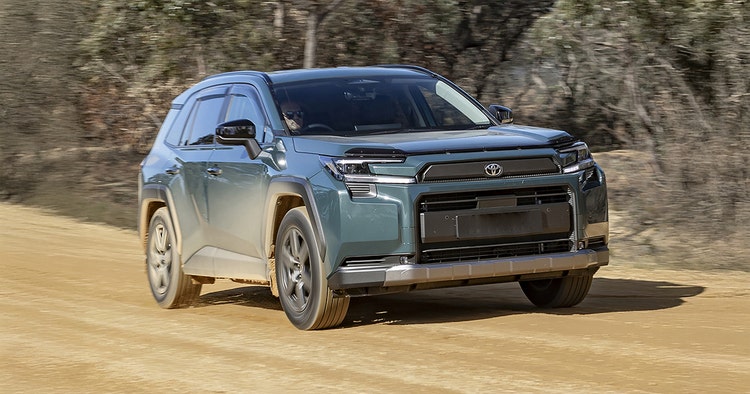
All variants of the 2026 Toyota RAV4 feature a decent list of standard equipment, with the base-model GX featuring:
- LED headlights
- 17-inch alloy wheels
- Push button start
- Cloth upholstery trim
- Dual-zone climate control
- 12.3-inch digital instrument cluster
- 10.5-inch infotainment touchscreen
- Digital radio
- Wireless Apple CarPlay
- Wired Android Auto
- Five USB-C charging outlets
The GXL models add:
- 18-inch alloy wheels
- Tinted rear windows
- Keyless entry
- Leather-wrapped steering wheel
- Auto-dimming rear-view mirror
- Wireless phone charger
The mid-grade Edge variants include:
- Unique front and rear bumpers
- 19-inch alloy wheels
- Power-operated tailgate
- Premium upholstery
- 12.9-inch infotainment touchscreen
The premium XSE model includes:
- 20-inch wheels
- Enhanced LED headlights
- Sunroof
- Heated front seats
- Power adjustable driver’s seat with memory function
The luxurious RAV4 Cruiser features:
- 20-inch machined black alloy wheels
- Heated and ventilated front seats
- Heated rear seats
- Power adjustable front passenger seat
- Leather trim
- Head-up display
- Digital rear-view mirror
- Dual wireless phone chargers
- Premium nine-speaker JBL audio system
And the GR Sport includes:
- Wider 20-inch alloy wheels
- Unique front and rear bumpers
- GR tuned suspension with rear strut brace
- Heated steering wheel
- GR premium trim with suede highlights
- GR Sport knee pads
- High-speed 45W USB-C charging outlets
What safety features does the Toyota RAV4 have?
All variants of the 2026 Toyota RAV4 feature a comprehensive suite of advanced crash avoidance systems and driver aids, including:
- Autonomous emergency braking
- Adaptive cruise control
- Lane keeping assistance
- Speed sign recognition
- Front and rear cross traffic alert
- Blind spot monitoring
- Safe exit assist
- Eight airbags
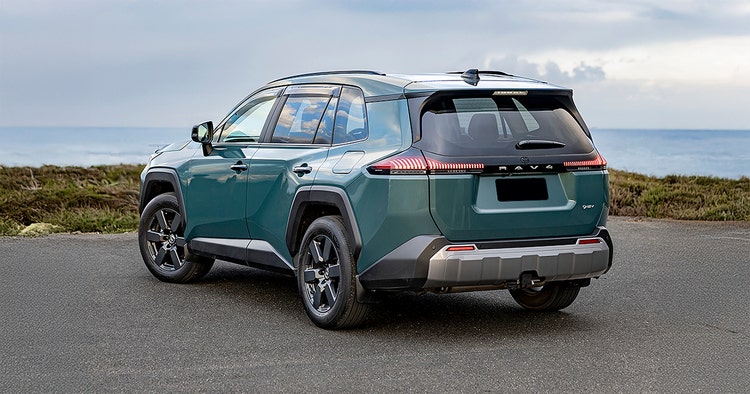
The refined safety systems are built upon with advanced telematics that automatically transfers more comprehensive data to a Toyota call centre in the event of an accident, and for the first time, a Toyota will have an embedded dash cam using its onboard cameras, which can be voice activated.
What is the Toyota RAV4 like on the inside?
Inside there is a new presentation of the dashboard area underpinned by the Australian debut of Toyota’s Arene software.
While there wasn’t really the chance to spend extended time drilling into the intricacies of Arene during our preview drive of a pre-production model, the sensible nature of operations was clear.
The huge infotainment screen even has a home button, which is an improvement on recent Toyotas such as the Prado.
There’s a choice of function cards including sat-nav, audio and even drive modes (eco, normal, sport and custom). Widgets are changeable on the screen.
The dash sits 40mm lower to improve visibility and Toyota has intentionally grouped various functions and switchgear together in an attempt to speed-up access.
There are hard buttons for audio power and volume, climate control temperature and the window demister. The fan speed is a permanent display in the bottom of the screen.
Happily, the complex customisation previously offered in high-spec RAV4s’ instrument cluster has been abandoned – it was a system shared with Lexus that seemed a lot of effort for the limited info supplied.
The new cluster is simpler to tune and has more information to tap into, including a fuel consumption graph.
An interesting new design feature was the reversible soft-top of the lidded bin that could be flipped over, plugged back in and used as a tabletop.
Storage includes a reasonable glovebox, a generous bin and double cupholder in the centre console.
The decision to keep the 2026 Toyota RAV4 on its current wheelbase means rear seat room remains behind the best in class.
It’s not bad, it’s just taller people will find more leg space elsewhere – like in a Sportage.
The rear door also doesn’t open that widely, which doesn’t aid entry and exit.
Toyota says boot space has also increased slightly with the new model RAV4, but no figures have been supplied.
What is under the bonnet of the Toyota RAV4?
Toyota hasn’t revealed everything as yet, which is no surprise so far out from launch, but it has confirmed power levels of the carryover 2.5-litre hybrid powertrain drops from as much as 163kW to 143kW because of tougher emissions requirements. A combined torque figure, as usual for a Toyota hybrid, is unstated.
As before, power distribution is via an e-CVT to either the front or all four wheels. All-wheel drive is created by bolting an e-motor to the rear axle – there’s no mechanical link like on a Subaru Forester or Hyundai Tucson.
Toyota says improvements have been made to the transaxle, power control unit, battery and e-motors which has resulted in claimed efficiency gains, just not concrete ones.
The plug-in hybrid versions due later this year will feature the same mechanical set-up but utilise a larger 22.7kWh lithium-ion battery that helps extract more power from the e-motors, with the front-drive versions producing 200kW while AWD models will generate 227kW.
Toyota has yet to disclose how far the PHEV versions can travel on electric power alone, but says they will be able to be recharged at a maximum rate of 50kW on DC power and 11kW on AC power.
They will also feature a 1500W inverter that allows owners to use the energy stored in the battery to power portable devices remotely.
What is the Toyota RAV4 like to drive?
Our drive session at the Anglesea test track focussed on two sixth-generation 2026 Toyota RAV4 pre-production hybrids; an all-wheel drive Edge and a front-drive Cruiser.
There was also the chance to sample a fifth-gen RAV for comparison.
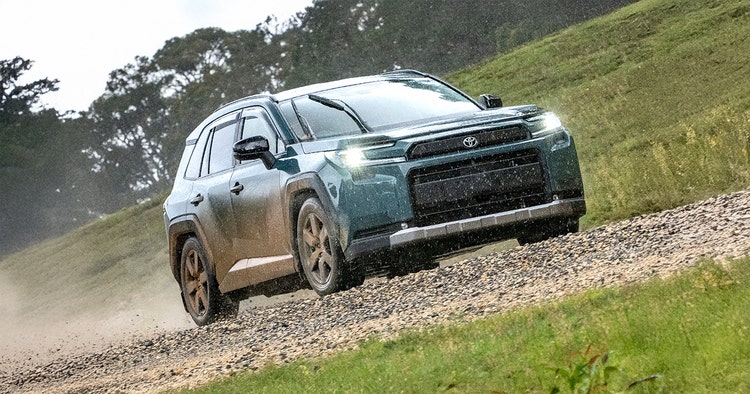
The good news? They drive very much like the old model. Which is to say light and sharp electric-assist steering, sure handling and comfortable ride thanks to independent suspension.
The Cruiser retained its composure despite riding on 20-inch alloys; a substantial upgrade from the old model’s 18s, though there was perhaps more tyre noise.
The Edge AWD meantime rode on 19-inch wheels (as before) and perhaps steered a tad lighter mid-corner.
Really, for anyone upgrading from the fifth- to sixth-generation RAV4, the experience would be very familiar while anyone fresh to the RAV4 would find it a pleasant, refined and calm drive.
The powertrain response is a little duller in the new generation, but it is not as dramatic as a 20kW deficit might suggest. Lively would be a generous description.
Of the two RAVs we perused, only the Cruiser gets shift by wire and a gear selector tab, but there’s no pseudo manual gearchange option such as paddle shifters – they’re reserved for the GR Sport PHEV.
The Edge could change manually via a traditional lever but missed out on sport mode and its driver’s seat felt slightly underdone for size and bolster.
How much does the Toyota RAV4 cost to maintain?
Toyota has yet to confirm exact ownership credentials for the new RAV4, but it is expected to be covered by the brand’s standard five-year unlimited kilometre warranty with roadside assistance.
Owners who maintain their vehicle within the Toyota dealership network to the prescribed schedule can be offered an extended warranty for two more years.
The hybrid battery is guaranteed to maintain at least 70 percent of its useable storage capacity for the first seven years or 160,000km. Toyota will extend this up to 10 years if the logbook servicing is maintained every year with a battery health check.
Should I lease a Toyota RAV4?
Don’t break what works very well... that seems to be Toyota’s philosophy with the 2026 RAV4.
If the price rises weren’t so substantial it would be easy to tick the box and settle in for another five years of RAV4 rolling on, but being so ambitious with pricing opens up a sizable crack in the RAV’s armour.
Look, it’s still good, but it’s not good enough to justify such a pricing gulf.
If this thing really goes on to be Australia’s best-selling vehicle in 2026 then there’s some people in the market for a medium SUV who will have spent more money than they need to.
2026 Toyota RAV4 Edge AWD at a glance:
Editor’s Rating: 7.4/10
$55,340 (plus on-road costs)
Half one 2026
2.5-litre four-cylinder petrol-electric
TBA (electric motor: TBA)
143kW
e-CVT
TBA
TBA
TBA
2026 Toyota RAV4 Cruiser 2WD at a glance:
Editor’s Rating: 7.4/10
$56,990 (plus on-road costs)
Half one 2026
2.5-litre four-cylinder petrol-electric
TBA (electric motor: TBA)
143kW
e-CVT
TBA
TBA
TBA
Disclaimer: Images supplied by carsales
Explore Toyota RAV4 Novated Leasing
A Toyota RAV4 novated lease may help eligible employees package their car and running costs into one regular payment. Learn more about Toyota novated leasing, how a novated lease works, and use our novated lease calculator to estimate your potential costs and savings.