

BYD Sealion 5 Review
Chinese brand introduces Australia’s cheapest mid-sized plug-in hybrid SUV


By carsales.com.au
The driveway into cheaper, cleaner motoring just became a little wider – and easier to access – thanks to the arrival of the BYD Sealion 5.
The Chinese brand has expanded its budget-friendly, family-focused line-up of SUVs with the most affordable mid-sized plug-in hybrid yet.
Slightly smaller and more affordable than the established Sealion 6, the Sealion 5 brings the promise of high-tech equipment, decent electric-only driving range and the practicality of a five-seat mid-size SUV.
We recently got behind the wheel of a pre-production version and while it presents as a compelling option, we still have questions…
How much does the BYD Sealion 5 cost?
The BYD Sealion 5 is available in two model grades, the entry-level Essential that costs from $33,990 plus on-roads and the range-topping Premium that commands a $4000 premium.
That sees the Sealion 5 undercut the previous PHEV price leader, the Chery Tiggo 7 Super Hybrid ($39,990 drive-away) as well as other newcomers like the Geely Starray EM-i ($37,490 plus on-roads) and the Jaecoo J7 SHS Track ($43,990 driveaway).
What standard equipment does the BYD Sealion 5 feature?
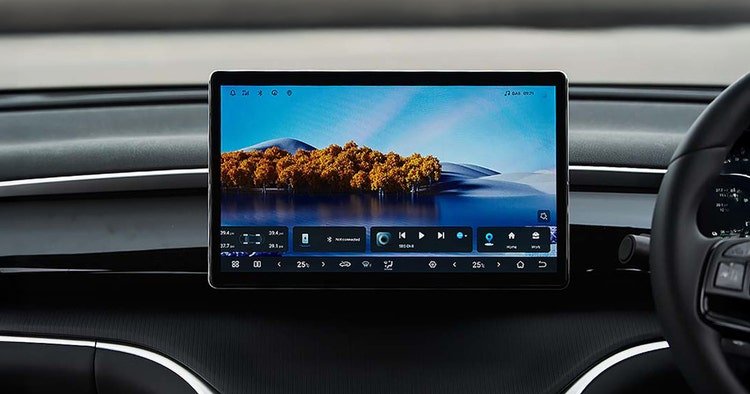
The BYD Sealion 5 comes equipped with a generous level of standard equipment, even at the base level Essential trim, including:
- 18-inch alloy wheels
- LED headlights
- Keyless entry with push-button start
- Dual-zone climate control with rear air vents
- Synthetic leather trim
- 8.8-inch digital instrument cluster
- 10.1-inch infotainment touch screen
- DAB+ digital radio
- Bluetooth connectivity
- Wireless Apple CarPlay and Android Auto
- Embedded satellite navigation
- 4G cloud services
- Six-speaker audio system
The Premium model adds:
- Panoramic sunroof
- Power-operated tailgate
- Roof rails
- Power adjustable driver and passenger seats
- Heated and ventilated driver seat
- Larger 12.8-inch infotainment touch screen
- Nine-speaker audio system
- Wireless phone charger
What safety features does the BYD Sealion 5 have?
The BYD Sealion 5 has yet to be tested by ANCAP, but both variants come equipped with a comprehensive suite of advanced safety systems and driver aids, including:
- Automated emergency braking
- Adaptive cruise control
- Lane keeping assistance
- Traffic sign recognition
- Rear cross traffic alert
- Blind spot detection
- Door opening warning
- Seven air bags
- Rear parking sensors
- Reverse parking display
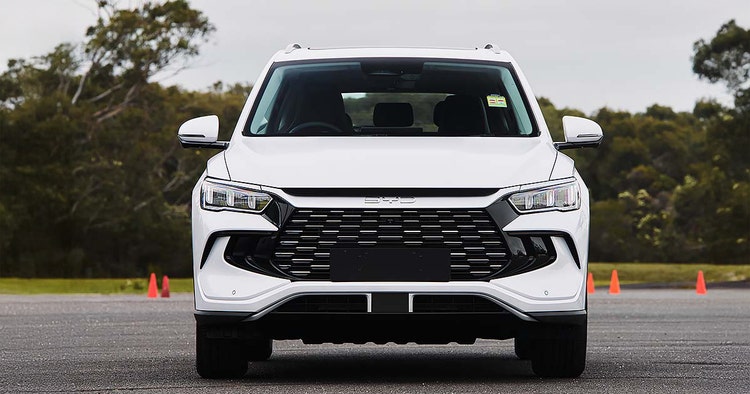
The Sealion 5 Premium adds a few extras, including front parking sensors and a 360-degree parking display.
What is the BYD Sealion 5 like on the inside?
Cabin fit and finish is nice with an array of quality-feeling materials scattered throughout (mismatched materials and textures are a BYD specialty), along with plenty of physical buttons on the centre console that bring a practical element to an otherwise tech-laden cabin.
BYD says access to apps such as Spotify, in-car karaoke, YouTube, Disney+ and Amazon Books will be available from launch, while more apps will be rolled out in future.
A spacious second row with decent amenities (a pair of USB ports, air vents and ISOFIX point at either side) will comfortably fit a pair of average-sized adults (anyone over 175cm might struggle for headroom), although toe room behind the driver’s seat is limited thanks to a vent-type contraption.
Average on paper, the 463L boot looks generous in size and rather deep, with a flat-loading space and a little extra storage space for smaller items under the floor for things like charging cables and a tyre repair kit (sadly, it doesn’t come with a spare wheel).
What is under the bonnet of the BYD Sealion 5?
Both versions of the BYD Sealion 5 are powered by a 1.5-litre petrol four-cylinder that produces 72kW and 122Nm on its own, with a separate electric motor that generates an additional 145kW and 300Nm for a maximum combined output of 156kW.
Both also utilise a hybrid transmission that drives the front wheels only, but each has a different pack (12.9kWh in the Essential and 18.3kWh in the Premium) that dictates their claimed average fuel consumption figures and the distance they travel on electric power alone.
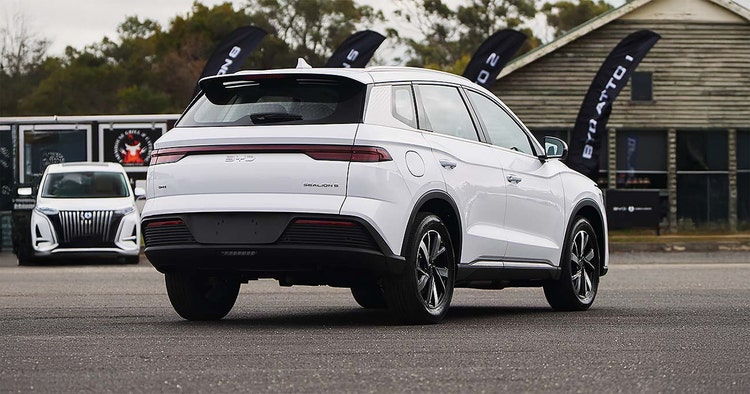
The smaller unit in the Essential delivers up to 71km of zero emission motoring and a claimed average of 1.2L/100km when the battery holds between 25-100 percent state of charge and 4.5L/100km when it is below 25 percent, while the Premium can cover up to 100km on its larger battery, but the heavier unit has a negative impact on fuel consumption with claimed figures of 1.3L/100km and 4.6L/100km respectively.
The Sealion 5 doesn’t come with DC fast charging capabilities Down Under. Instead, it’ll offer AC charging up to 3.3kW, and we’re told charging times will vary depending on the grade: the Essential should go from 15-100 per cent in 4.5 hours, while the Premium will take six.
What is the BYD Sealion 5 like to drive?
Our brief first drive of the 2026 BYD Sealion 5 took place at the Lang Lang proving ground in Victoria, behind the wheel of a pre-production version representative of a top-spec Premium, and first impressions are positive.
Behind the wheel, the Sealion 5 feels composed and confident at highway speeds, with the plug-in hybrid set-up blending its petrol and electricity seamlessly in the background.
There’s no jolting or shoving as it blends power sources and it’s a surprisingly quiet set-up – you’ll only hear the four-cylinder working under hard acceleration.
On a loop designed to simulate a high-speed country road, the Sealion 5 irons out most lumps and bumps with ease, remaining sure-footed even after a larger dip in the road – you hear a lot more of what’s happening underneath the car than you feel, which is a good thing.
Acceleration is brisk enough for a mid-size plug-in hybrid SUV, but it’s not class-leading, and if you want something more performance-oriented, the all-paw Sealion 6 is worth a look.
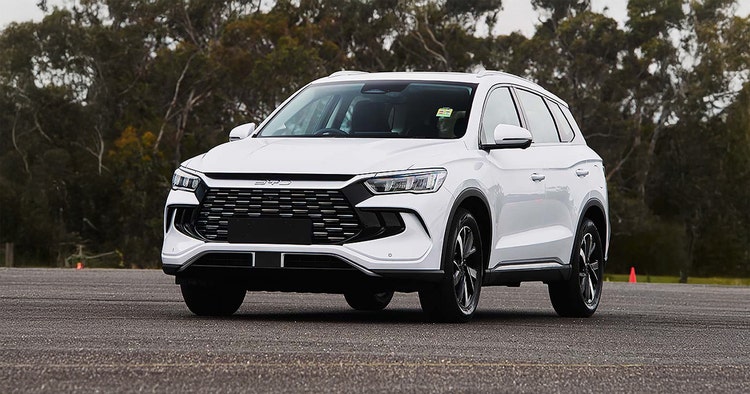
Our brief test failed to uncover many negatives, unless you count the bland exterior design and light steering that’s lacking in feel or feedback.
However, we also noticed the hazard lights would activate during reasonable but not excessive braking – nowhere near enough to activate the ABS.
Most modern cars these days have similar tech to warn other drivers you’re braking heavily, but it doesn’t usually activate unless the ABS has been triggered or close to.
Not that it’s a major problem, but in Sealion 5, it just seems to activate prematurely with less pedal pressure than you’d expect.
We also found the big 12.8-inch touchscreen – which doesn’t rotate like other BYD models – a little convoluted with all its menus and options, although admittedly, owners would ultimately become familiar with it and its optional shortcuts.
Elsewhere, some questions remain around the PHEV system’s battery.
Speaking to local media at the drive event, a BYD executive said the battery will preserve a minimum 25 per cent charge to avoid the vehicle having to rely on the 1.5-litre petrol engine alone, however “it is possible to go below the 25 per cent if you’re driving very hard”.
Confusing matters more, BYD’s quoted recharge times mention charging from a 15 per cent state of charge; a level it’s supposedly not designed to drop to.
Confused? Us too.
How much does the BYD Sealion 5 cost to maintain?
The BYD Sealion 5 is covered by the brand’s standard six-year, 150,000km warranty with roadside assistance while the battery pack guaranteed for eight years or 160,000km.
Should I lease a BYD Sealion 5?
The BYD Sealion 5’s ompetitive pricing is certain to be its unique selling point, and the fact it is highly equipped and offers a decent driving experience – based on this brief pre-production test – is the cherry on top.
The momentum with which BYD is bringing new models to market, along with its aggressive pricing strategy sees this new mid-size SUV arrive as a compelling option.
2026 BYD Sealion 5 at a glance:
Editor’s Rating: 7.4/10
TBC
Early 2026
1.5-litre four-cylinder petrol-electric
72kW/122Nm (electric motor: 145kW/300Nm)
156kW
Dedicated Hybrid Transmission
18.3kWh lithium-iron phosphate
100km (NEDC)
TBC
4.6L/100km (NEDC)
TBC
Not tested
Disclaimer: Images supplied by carsales
Explore BYD SEALION Novated Leasing
A BYD SEALION novated lease may help eligible employees package their car and running costs into one regular payment. Learn more about BYD novated leasing, how a novated lease works, and use our novated lease calculator to estimate your potential costs and savings.