
Australia sets new record for EV sales in 2025
But lobby groups warn purchase incentives are still needed


By carsales.com.au
Australians purchased more electric vehicles in 2025 than ever before.
According to official sales results issued by the Federal Chamber of Automotive Industries (FCAI), battery-electric vehicles broke through the 100,000-unit barrier in 2025.
This was a 13.1 per cent increase from the previous year, culminating in an 8.3 percent total market share – up from 7.4 per cent in 2024 against a largely static overall market.
The new benchmark result came despite category leader Tesla’s sales dropping by almost 25 percent as popularity for the Model 3 sedan collapsed in the wake of Elon Musk’s political alignment with the US government, as well as an influx of new alternatives from predominantly Chinese manufacturers.
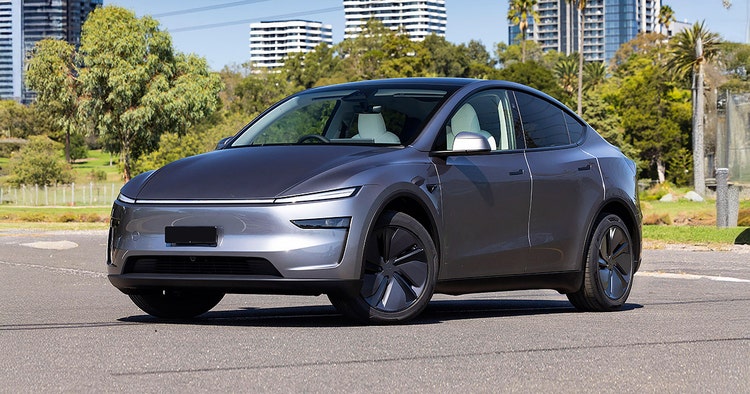
The symbolic breaking of the six-figure sales barrier was also in-line with the introduction of the New Vehicle Emissions Scheme (NVES) that is designed to gradually strangle conventional vehicles with internal combustion engines and encourage a greater transition towards electric vehicles.
However, it also coincides with the federal government starting a statutory investigation into the future of the Electric Car Discount scheme - a key component of which is a Fringe Benefits Tax (FBT) exemption for EVs priced below the Luxury Car Tax when leased – and looking to introduce a road user charge for EVs and plug-in hybrids to compensate for lost revenue from the petrol excise charges.
The FBT exemption has reportedly aided the purchase of almost 100,000 vehicles since its introduction in July 2022, including PHEVs, which were eligible until April 1, 2025.
However, Treasury estimates the policy will cost $23.4 billion in lost revenues if it continues to run to the middle of the next decade.
In a statement accompanying yesterday’s release of annual sales figures, FCAI chief executive Tony Weber counselled against the removal of incentives
“The NVES has provided policy certainty and has led to an increased availability of EVs in Australia,” he said
“However, it has had little discernible effect on EV demand. Countries such as Germany, the Netherlands, New Zealand and the United States have seen sharp declines in EV sales when incentives were reduced or removed.
“In Australia, remaining support mechanisms such as Fringe Benefits Tax concessions are currently under review. Any policy changes must recognise the clear relationship between incentives and consumer demand, not just vehicle supply.”
Rohan Martin, the chief executive of the National Automotive Leasing and Salary Packaging Association (NALSPA) also backed the extension of the FBT exemption.
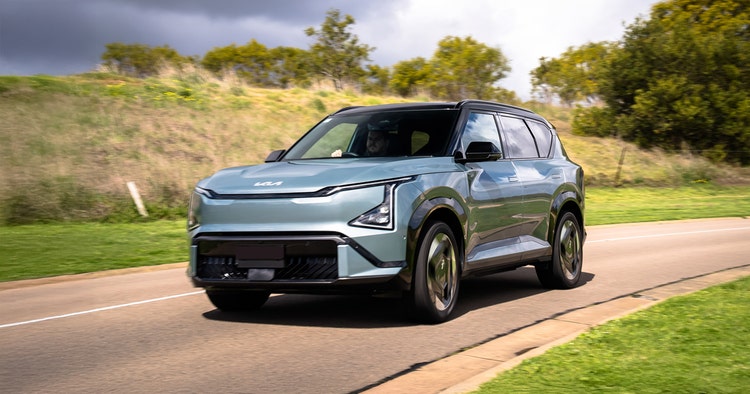
“Without the tax incentive on electric cars, tens of thousands fewer EVs would be on Australian roads today,” he said.
“The Climate Change Authority advises that half of all new cars sold between now and 2035 must be electric to hit even the lower end of Australia’s emissions target.
“This requires an enormous scale-up that cannot happen without continued policy support.
“Australia simply cannot sell the number of EVs it needs to and reduce vehicle emissions without the sustained support of the FBT exemption and other complimentary measures.”
The Electric Car Discount policy review will be led by the Australian Centre for Evaluation, which is located within the Commonwealth Treasury, with the Department of Climate Change, Energy, the Environment and Water also contributing.
Written submissions can be made until February 6 with findings expected to be released by mid-2027.
“The take up of electric vehicles over the past few years has exceeded expectations and that’s been good for drivers, good for business and good for the climate,” Federal Treasurer Jim Chalmers said.
“The electric car discount has made EVs cheaper to support early adoption and the next step is to review the policy as we committed to do when we legislated it.
“This is all about supporting Australians to make the switch to more efficient vehicles and ensuring we have the right settings in place for the transport sector over the long term.”
Disclaimer: Images supplied by carsales.
Explore Novated Leasing
A novated lease may help eligible employees package their car and running costs into one regular payment. Learn more about how a novated lease works, and use our novated lease calculator to estimate your potential costs and savings.